Like our DBC editor? You'll love our CAN hardware
CANedge: CAN bus data logger
Record raw CAN/LIN data to an 8-32 GB SD card and decode it via DBC files in our free software/API tools.
The CANedge1 is a pure offline CAN logger - while the CANedge2 (WiFi) and CANedge3 (LTE) automate data offload to your own server with OTA support.
learn moreCANsub: CAN bus streaming interface
The CANsub.2/CANsub.4 lets you stream CAN data in real-time via USB/Ethernet - with pro specs, built-in LCD display and zero software installation.
The free webCAN app runs on the CANsub: Simply open the device URL in your browser to instantly send/receive CAN frames, DBC decode data or plot CAN signals.
learn more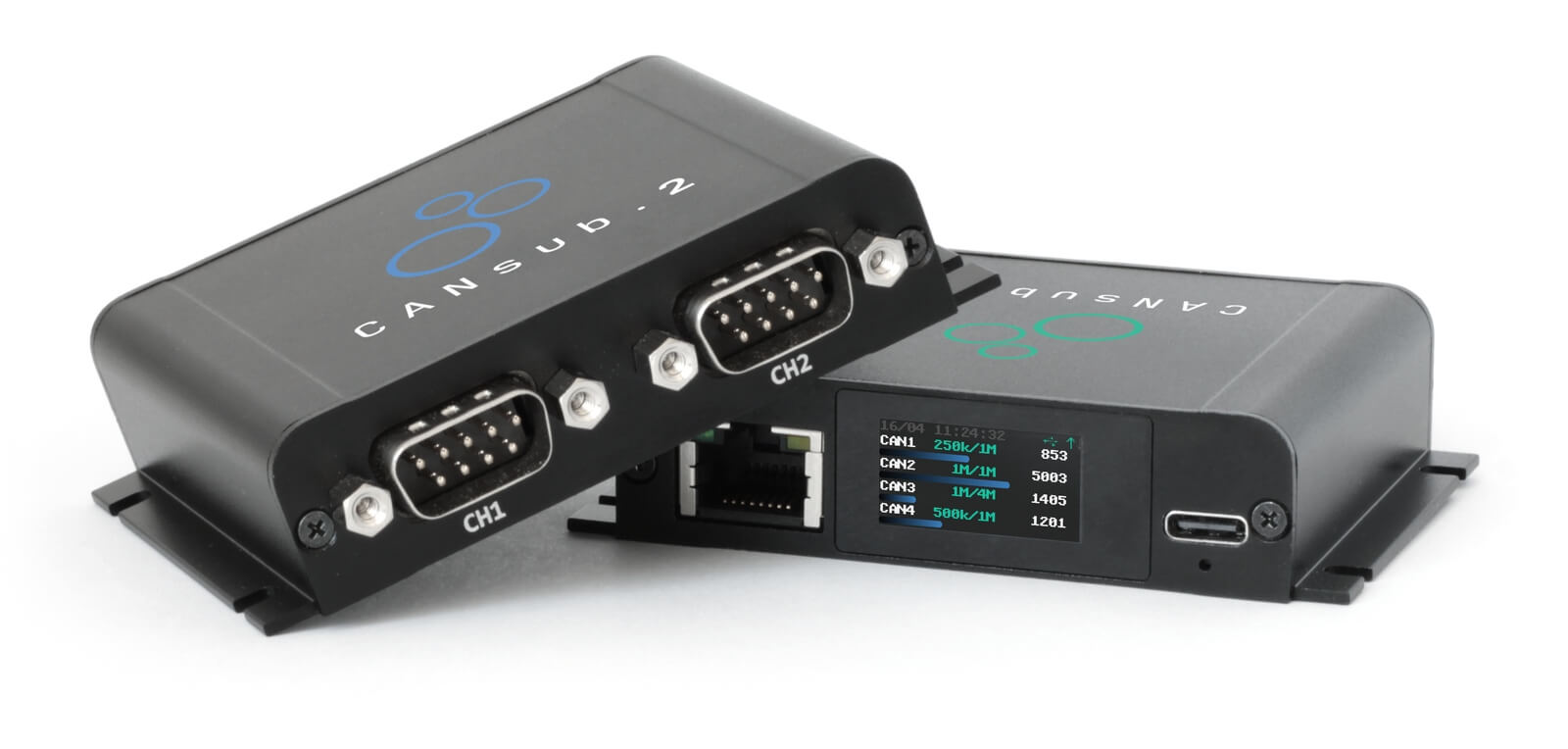
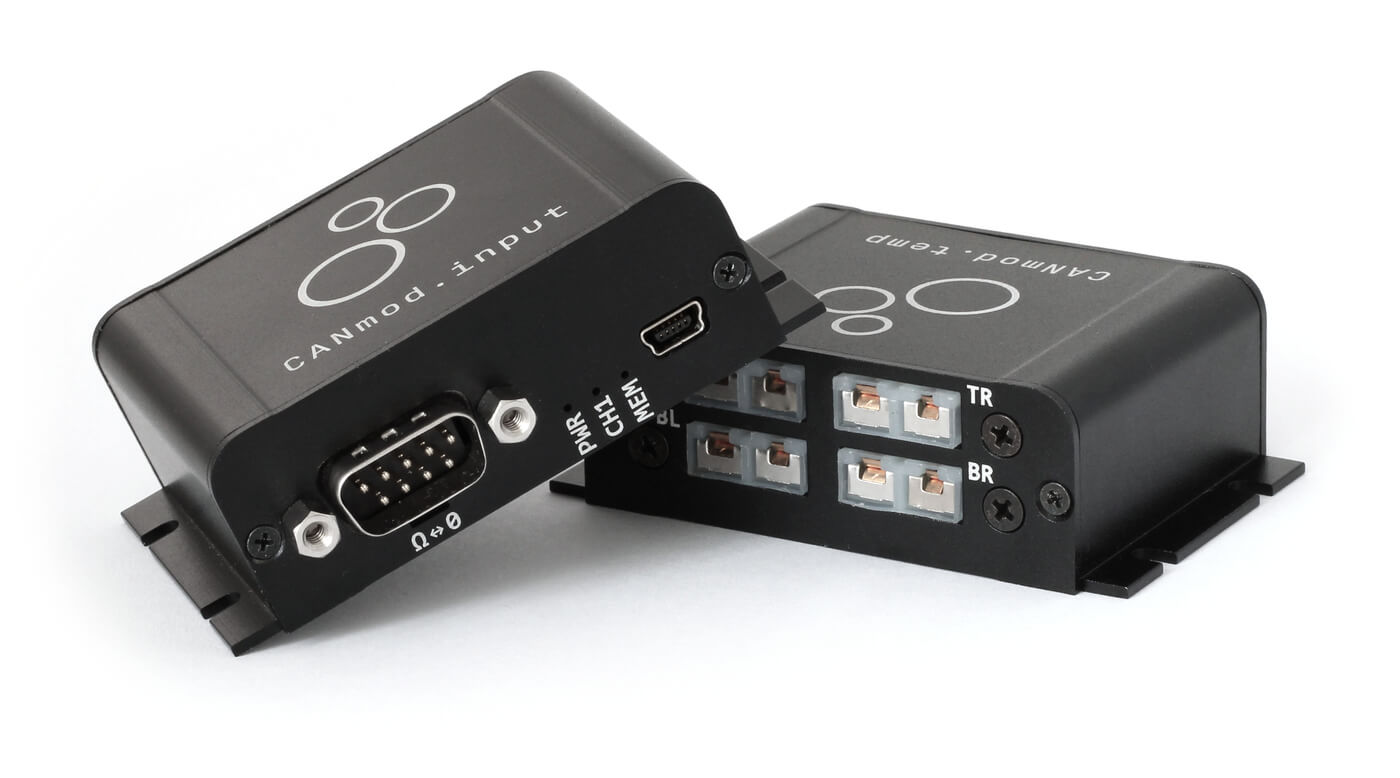
CANmod: sensor to CAN modules
The CANmod lets you convert sensor data (GPS, temperature, analog, 4 x CAN, ...) to CAN frames - for standalone integration with any CAN bus. Ideal for adding data for your ECUs, telematics equipment or CAN bus data loggers - incl. the CANedge. Support optional daisy chaining and USB streaming.
learn moreNeed a simple way to create and edit your DBC files?
This online DBC editor lets you load, edit and save DBC files - as well as create new DBC files from scratch.
Key features include:
- Load any CAN / CAN FD DBC files - or create new from scratch
- Support for J1939, NMEA 2000, OBD2, UDS, CANopen and more
- Signal preview enables real-time insight into signal encoding
- Quickly test signal physical value decoding
- Monitor in real-time the DBC syntax for the selected message
- Support for extended multiplexing (e.g. used in OBD2 and UDS)
- Field validation helps ensure valid DBC files are created
- Easily validate changes via git-style 'change comparison' view
- Intuitive handling of Intel/Motorola in line with DBC syntax
The goal is to create the best DBC file editor available - so if you have any feedback, suggestions or bug reports, please contact us.
Note that the DBC file editor is not to be copied or hosted on any other website without our written consent. You are, however, welcome to link to this editor from your website.
This DBC file editor is a purely client-side tool. This means that your DBC file is not uploaded to some backend server for processing - everything is done directly via your browser, using Javascript/HTML/CSS only. In other words, you can use the editor freely online also for sensitive DBC files.
However, if you prefer to not use it online, you can instead download the DBC file editor to your local disk and use it offline (see the 'download' link in the editor upper right corner). Simply unzip the downloaded zip file and open the dbc-editor.html file via your browser.
A 'CAN bus database' aka DBC file is a simple ASCII style text file that contains information on how to decode raw CAN bus data.
For example, if you record CAN bus data from a specific car, the data you record will consist of a set of CAN IDs and CAN data payloads. In order for this data to be useful for analysis or visualization, it must first be decoded. This process involves identifying which CAN IDs contain which signals (parameters) - and how to extract them. The DBC file contains this information in a standardized way, meaning that most CAN bus software and API tools will allow you to easily decode raw CAN bus data if you provide the DBC file as a secondary input to the software/API.
Please see our DBC intro for more details.
Most CAN bus software tools support loading raw CAN data together with a DBC file in order to 'decode' the data to human-readable form (aka physical values).
For example, all the CANedge software/API tools for visualization/analysis support loading the raw MF4 log files from the CANedge together with one (or more) DBC files, in order to decode the data.
Need to log / decode CAN bus data?
Get your CANedge today!